
😱 Florida Explorers Descend into 1715 Shipwreck – And What They Found Shocked the World 😱
In the depths of the Atlantic Ocean off Florida’s coast lies a treasure trove of history, waiting to be uncovered.
The story begins with the ill-fated Spanish treasure fleet of 1715, which met its demise during a ferocious hurricane.
This catastrophic event not only claimed the lives of nearly a thousand sailors but also scattered an immense fortune across the seabed.
The summer of 1715 was filled with promise as ships laden with gold, silver, and precious goods set sail from Havana, bound for Spain.
The fleet, under the command of Captain General Juan Esteban de Ubila, carried over 14 million pesos in treasure, a testament to Spain’s colonial wealth.

However, on July 30, 1715, disaster struck.
A sudden hurricane enveloped the fleet, destroying the ships and leaving survivors to wash ashore near present-day Vero Beach and Fort Pierce.
In the aftermath of the storm, the Spanish crown scrambled to recover the lost treasure.
Divers and salvagers worked tirelessly to retrieve what they could, but much of the wealth remained hidden beneath shifting sands and coral reefs.
Over the centuries, local legends grew, and the area became known as the “Treasure Coast,” as beachcombers began to find gold coins and other artifacts washed ashore after storms.
The search for the lost fleet lay dormant for decades until the 1950s when a contractor named Kip Wagner reignited interest in the wrecks.

Armed with a metal detector and a passion for history, Wagner discovered that coins consistently appeared along the same stretch of beach, leading him to believe they were remnants of the 1715 fleet.
In 1953, he formed the Real Eight Company, which employed early metal detection technology to locate the wrecks.
Their efforts paid off in 1959 when they found their first major wreck site, revealing a bounty of silver coins and jewelry.
This discovery sparked a frenzy of treasure hunting along Florida’s coast, drawing adventurers and historians alike.
However, the state of Florida quickly intervened, asserting ownership of the artifacts found in its waters, leading to legal battles over salvage rights.
As technology advanced, modern treasure hunters utilized sophisticated equipment to explore the wrecks.

In 2015, exactly 300 years after the disaster, a team known as Queen’s Jewels LLC made headlines when they recovered over $4.5 million worth of gold coins, including rare royal escudos minted for King Philip V.
This discovery not only reignited public interest in the lost fleet but also underscored the ongoing allure of treasure hunting.
Yet, amidst the excitement of recovering gold, a deeper narrative began to unfold.
In a recent dive, explorers uncovered a chest that contained not just coins but personal effects, including a letter written in early 18th-century Spanish.
This poignant correspondence revealed the fears and hopes of a sailor longing for home, transforming the wreck from a mere treasure site into a tomb of memory.
As archaeologists and historians studied the artifacts, they stumbled upon items that hinted at a more complex story than previously understood.
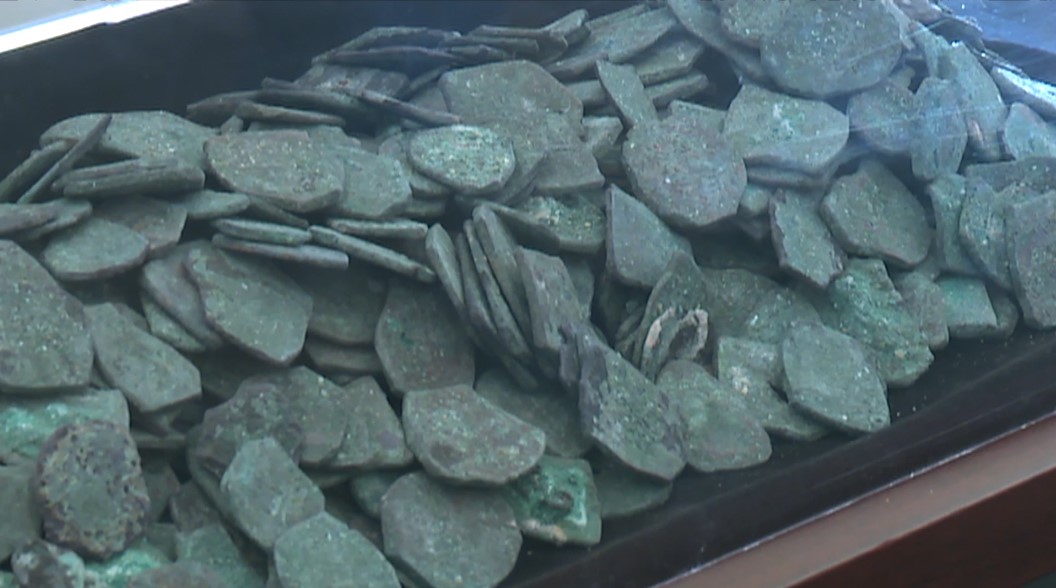
Among the Spanish relics were artifacts suggesting connections to distant lands, raising questions about smuggling and clandestine trade within the Spanish Empire.
The presence of East Asian ceramics and North African pendants suggested that the 1715 fleet may have carried more than just royal treasure.
These findings have ignited debates among scholars about the nature of trade and commerce during the colonial era.
The wreck of the 1715 fleet has become a symbol of globalization before the term even existed, revealing a network of exchange that connected empires through secretive dealings and forbidden exchanges.
As researchers continue to analyze the artifacts, the story of the 1715 fleet evolves from a simple tale of loss to a rich tapestry of human experience.
The ocean, once a vault of riches, has transformed into an archive of grief and memory.

Each artifact recovered serves as a reminder of the lives lost and the dreams shattered by the storm.
Today, the legacy of the 1715 fleet extends beyond the allure of gold.
It has become a living classroom for marine archaeology, inspiring a new generation to seek not just treasure but truth.
The explorers who descend into the depths of the ocean may surface with riches, but they also emerge with a profound understanding of history’s fragility.
The Treasure Coast, once a quiet stretch of shoreline, has been forever marked by the legend of the lost galleons.
It has evolved into a vibrant community where the stories of sailors and their ill-fated voyage are woven into the fabric of local culture.

Annual events and festivals commemorate the fleet, honoring the endurance of those who sailed and the spirits of those who never returned.
As the sea continues to yield its secrets, the dream of treasure remains alive.
Locals still walk the beaches with metal detectors, hoping to discover glimmers of gold.
The ghosts of the 1715 fleet linger in the hearts and minds of those who live along the coast, reminding them that history is never truly buried beneath the waves.
In conclusion, the 1715 Spanish treasure fleet stands as a testament to the power of memory and the resilience of the human spirit.
What began as a maritime tragedy has transformed into a legacy that intertwines loss with discovery, reminding us that history, like the ocean, is ever-changing and full of surprises.
News

😱 Is Ian Gillan Next? Shocking Retirement Rumors Emerge After David Coverdale’s Exit! 😱 – HTT
😱 Is Ian Gillan Next? Shocking Retirement Rumors Emerge After David Coverdale’s Exit! 😱 In the world of rock music,…

😱 The Shocking Truth Behind Ian Gillan’s Retirement Plans: Is It Time to Say Goodbye? 😱 – HTT
😱 The Shocking Truth Behind Ian Gillan’s Retirement Plans: Is It Time to Say Goodbye? 😱 Ian Gillan, the legendary…
😱 Is 3I/ATLAS a Cosmic Seed or a Galactic Trojan Horse? Prepare to Be Amazed! 😱 – HTT
New Evidence Sheds Light on the Enigmatic 3I/ATLAS: A Cosmic Visitor Defying Expectations Since the dawn of telescopic astronomy, interstellar…
😱 From Waltz to Heartfelt Confession: Andre Rieu’s Emotional Birthday Surprise! 😱 – HTT
😱 From Waltz to Heartfelt Confession: Andre Rieu’s Emotional Birthday Surprise! 😱 What’s the one love song that always melts…
😱 From Wedding Fiddler to Billboard King: How Andre Rieu Redefined Classical Music! 😱 – HTT
😱 From Wedding Fiddler to Billboard King: How Andre Rieu Redefined Classical Music! 😱 Andre Rieu did the unthinkable. He…

😱 Heartbreak in Rock: The Real Reason Behind Ace Frehley’s Untimely Death! 😱 – HTT
😱 Heartbreak in Rock: The Real Reason Behind Ace Frehley’s Untimely Death! 😱 Ace Frehley, the legendary guitarist and founding…
End of content
No more pages to load






