
New Evidence Sheds Light on the Enigmatic 3I/ATLAS: A Cosmic Visitor Defying Expectations
Since the dawn of telescopic astronomy, interstellar objects have been rare and puzzling phenomena.
Each confirmed visitor from beyond our solar system has pushed the boundaries of what astronomers thought possible.
Now, the third such object, known as 3I/ATLAS, has emerged with characteristics that refuse to fit neatly into existing categories.
Its hyperbolic trajectory, alien chemical makeup, and unusual dust properties raise profound questions about its origin and nature — questions that might challenge our fundamental understanding of how worlds form and evolve.
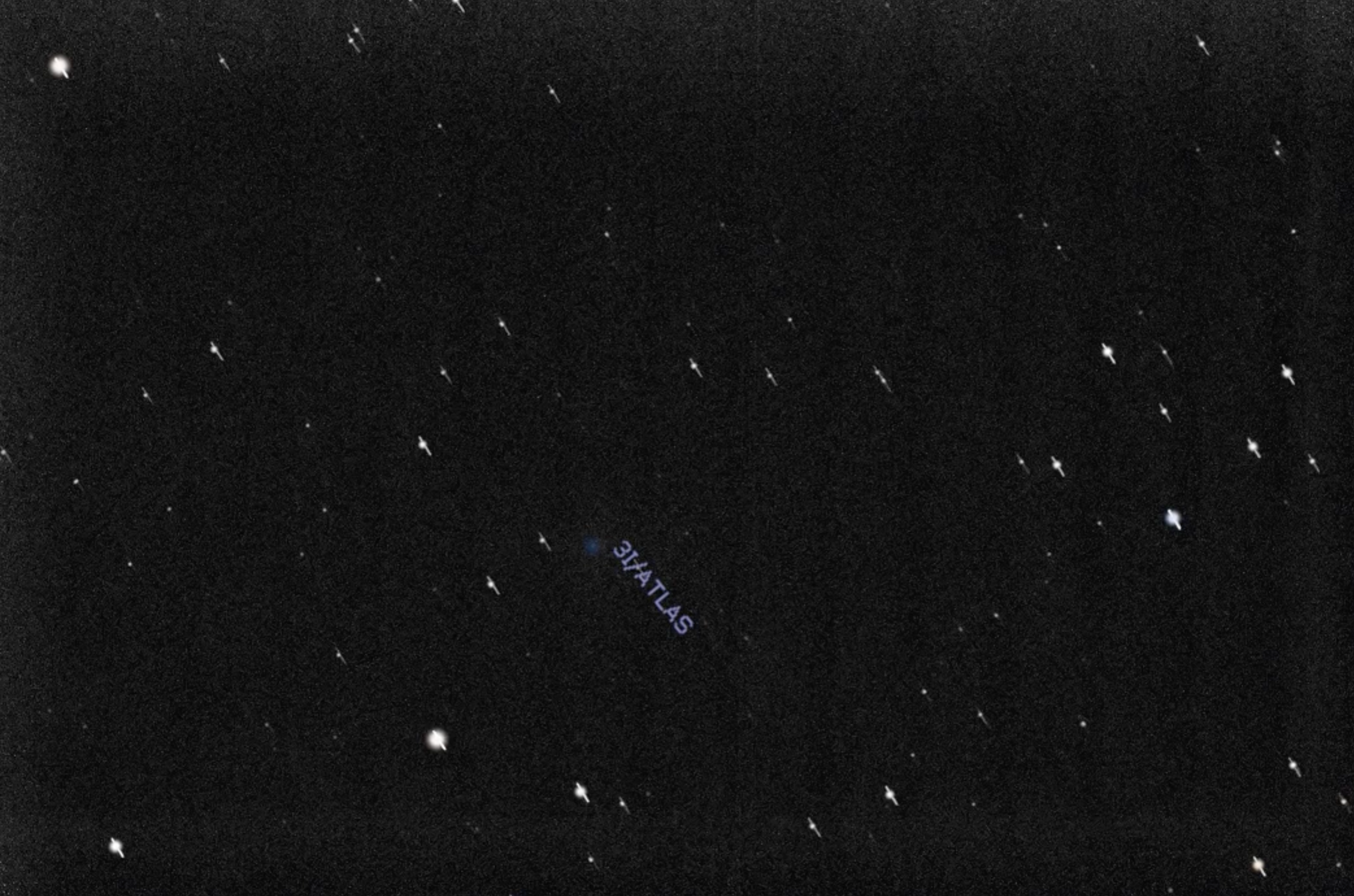
3I/ATLAS was first detected on July 1st, 2025, approximately 670 million kilometers from the Sun, visible in the southern skies over Chile.

Traveling at an extraordinary velocity of about 58 kilometers per second relative to the Sun, its hyperbolic, retrograde orbit indicates it originated far beyond the solar system’s gravitational influence.
Archival images traced its faint activity back to mid-June, extending the timeline for study and allowing astronomers to plot its path with increasing precision.
The comet’s journey is marked by significant milestones: a close pass by Mars on October 3rd at just 30 million kilometers, perihelion near the Sun on October 29th at 1.36 astronomical units, a prime observational window from Earth on December 19th when it approaches within 1.8 astronomical units, and a final close approach to Jupiter in March 2026.
Each of these events offers astronomers a critical opportunity to collect data and test competing hypotheses about the object’s nature.
One of the most startling discoveries about 3I/ATLAS is its chemical composition.
Unlike typical solar system comets, where water vapor dominates, this comet’s coma is overwhelmingly rich in carbon dioxide — almost eight times more abundant than water.

This unusual ratio forces scientists to reconsider existing models of comet chemistry and formation.
The early detection of oxygen emissions at a great distance from the Sun, where sunlight is usually too weak to release water vapor, suggests a volatile-rich surface or an exceptionally thin crust that reacts to even minimal solar heating.
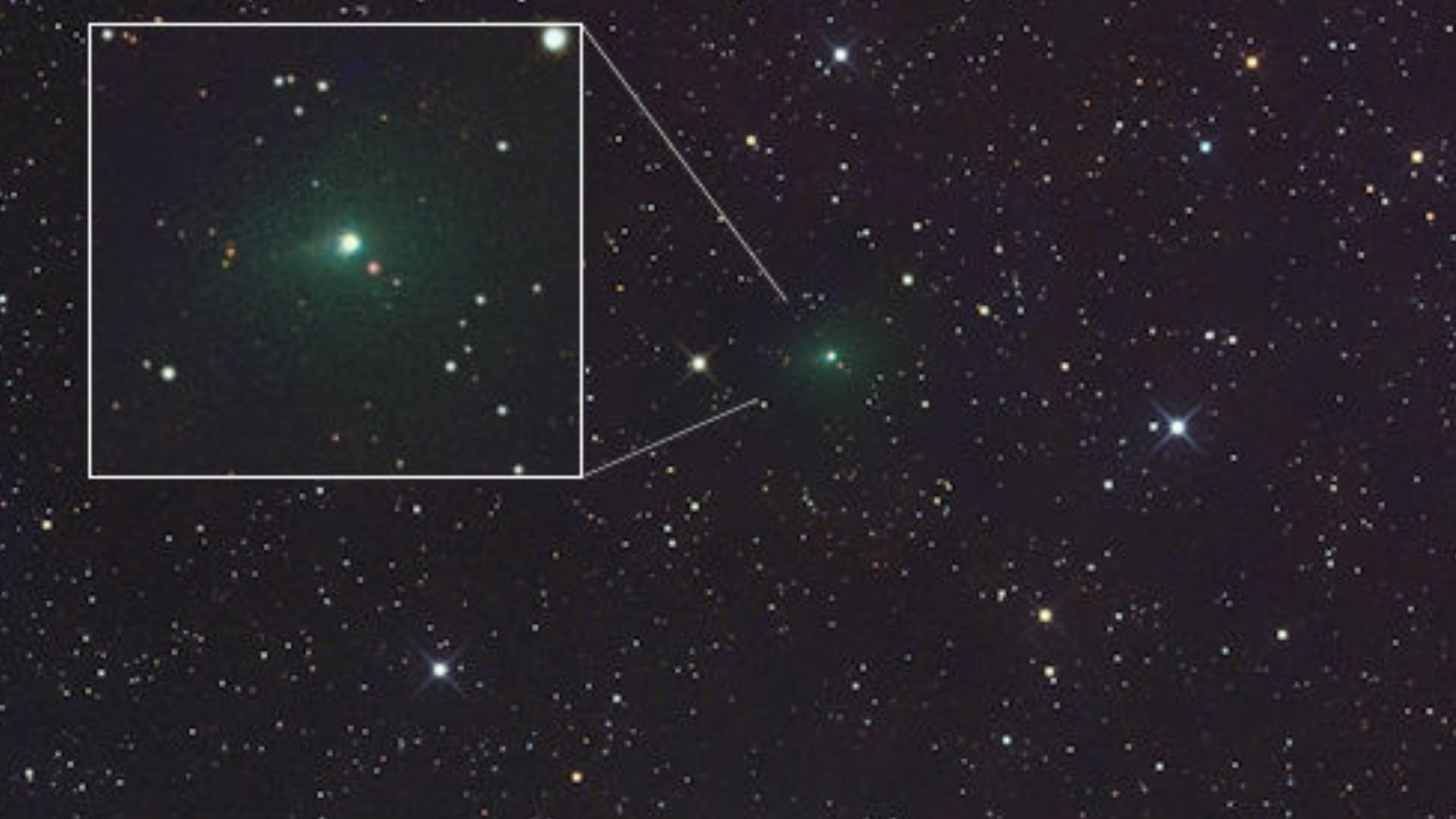
Imaging studies reveal a complex coma structure.
A broad, sunward-facing dust fan glows brightly, indicating large, porous grains being ejected efficiently from the nucleus.
This is accompanied by a faint anti-solar tail barely visible except in deep exposures.
The dust’s reflective properties and polarimetric measurements point toward highly porous, fluffy aggregates composed of numerous tiny particles, a structure rarely seen in comets.

Adding to the mystery, spectral analysis has detected nickel emissions but no iron — an anomaly in cometary dust chemistry.
The nickel-to-iron ratio in 3I/ATLAS far exceeds any recorded in solar system comets, hinting at a unique formation or processing history.
This chemical fingerprint, combined with the dust’s unusual polarization behavior, defies easy classification and suggests that 3I/ATLAS may have originated in an environment unlike any previously studied.
Scientists currently debate three main hypotheses to explain these anomalies.
The first, favored by many planetary chemists, views 3I/ATLAS as a natural, though chemically exotic, interstellar comet formed in the cold outer reaches of another star’s protoplanetary disk.
This interpretation sees the unusual chemistry and dust properties as extreme but natural variations within the diversity of cosmic bodies.

The second hypothesis proposes that 3I/ATLAS is a “planet seed” — a planetary building block ejected from a young stellar system.
If true, such objects could help explain rapid gas giant formation by delivering material across star systems.
Researchers are especially interested in isotopic ratios of hydrogen, carbon, nitrogen, and oxygen, which could carry the fingerprints of their birthplace.
Upcoming observations with powerful instruments like the James Webb Space Telescope (JWST), the Hubble Space Telescope, ALMA, and the Very Large Telescope (VLT) aim to measure these ratios with unprecedented precision.
The third and most radical possibility is that 3I/ATLAS is an engineered artifact or even a living system disguised as a comet.
Advocates of this view emphasize the need for extraordinary evidence — persistent, unexplained accelerations, impossible jetting patterns, or spectral lines that defy natural processes.
So far, no such definitive signals have been detected, but the scientific community remains vigilant.
This hypothesis demands rigorous proof, far beyond the anomalies observed so far.
All candidates must withstand rigorous scrutiny.
Astronomers are cautious to avoid false positives caused by instrumental errors, background noise, or statistical quirks.
With only two prior interstellar objects (Oumuamua and Boris) to compare, every new data point must be carefully contextualized.
Extraordinary claims require extraordinary evidence, and the bar for confirming anything beyond a natural comet is set impossibly high.
The upcoming observation windows are critical.
The October 3rd Mars flyby, although close, has yet to be targeted by Mars orbiters for detailed study.
The perihelion on October 29th promises peak comet activity, offering a chance to observe real-time changes in volatile release and dust ejection.
December 19th marks the prime opportunity for Earth-based and space telescopes to gather high-resolution spectra and isotopic data.
Finally, the March 2026 Jupiter flyby will allow precise astrometric measurements to detect any non-gravitational forces acting on 3I/ATLAS.
Each observation could confirm or refute the existing models.

Should the chemistry remain consistent with a carbon dioxide-dominated, cold-origin comet, the natural comet hypothesis will be strengthened.
If isotopic ratios deviate dramatically from solar system norms, the planet seed scenario gains traction.
And if unexplained accelerations or impossible spectral features emerge, the door opens to the artifact hypothesis — a prospect that would upend our understanding of cosmic visitors.
Regardless of the outcome, 3I/ATLAS is a rare and invaluable messenger from beyond our solar system.
Its study challenges scientists to balance skepticism with open-mindedness, to let data guide conclusions rather than preconceived notions.
The universe, it seems, may be more complex and stranger than ever imagined, with 3I/ATLAS standing as a testament to the unknown mysteries still waiting to be uncovered.
News

😱 Is Ian Gillan Next? Shocking Retirement Rumors Emerge After David Coverdale’s Exit! 😱 – HTT
😱 Is Ian Gillan Next? Shocking Retirement Rumors Emerge After David Coverdale’s Exit! 😱 In the world of rock music,…

😱 The Shocking Truth Behind Ian Gillan’s Retirement Plans: Is It Time to Say Goodbye? 😱 – HTT
😱 The Shocking Truth Behind Ian Gillan’s Retirement Plans: Is It Time to Say Goodbye? 😱 Ian Gillan, the legendary…

😱 From Waltz to Heartfelt Confession: Andre Rieu’s Emotional Birthday Surprise! 😱 – HTT
😱 From Waltz to Heartfelt Confession: Andre Rieu’s Emotional Birthday Surprise! 😱 What’s the one love song that always melts…
😱 From Wedding Fiddler to Billboard King: How Andre Rieu Redefined Classical Music! 😱 – HTT
😱 From Wedding Fiddler to Billboard King: How Andre Rieu Redefined Classical Music! 😱 Andre Rieu did the unthinkable. He…

😱 Heartbreak in Rock: The Real Reason Behind Ace Frehley’s Untimely Death! 😱 – HTT
😱 Heartbreak in Rock: The Real Reason Behind Ace Frehley’s Untimely Death! 😱 Ace Frehley, the legendary guitarist and founding…

😱 At Ace Frehley’s Funeral, Gene Simmons FINALLY Admits What The Secret Tape Ace Left Behind Contained 😱 – HTT
😱 At Ace Frehley’s Funeral, Gene Simmons FINALLY Admits What The Secret Tape Ace Left Behind Contained 😱 The rock…
End of content
No more pages to load






