😱 When Viral Myths Meet Interstellar Science: The 3I/Atlas Social Media Circus! 😱
In the cold darkness of space beyond Mars’s orbit, something extraordinary is unfolding.
New data have revealed that 3I/Atlas, an interstellar comet passing through our solar system, is unexpectedly active—venting jets of water at an astonishing rate of nearly 40 kilograms per second.
This activity occurs at approximately 3.51 astronomical units from the Sun, a distance where sunlight is typically too weak to trigger significant water sublimation in most comets.
The Swift ultraviolet and optical telescope, orbiting Earth, detected a surge of hydroxyl molecules—fragments of water molecules split by solar radiation—at a rate of about 1.35 × 10²⁷ molecules per second.
This unambiguous signal, confirmed through hours of stacked ultraviolet and visible exposures, signals vigorous outgassing activity that challenges long-standing cometary models.

Traditionally, comets only begin substantial water loss when they approach within about two astronomical units of the Sun.
Yet, 3I/Atlas is defying this rule, requiring at least 8% of its surface to be actively releasing water, significantly more than the typical 3-5% observed in solar system comets.
Detailed imaging and spectral analyses suggest that this water is not simply evaporating from the comet’s surface.
Instead, it appears to emanate from icy grains—tiny debris particles ejected from the nucleus—each acting like miniature steam vents.
These grains, suspended in the coma, sublimate water ice even under faint sunlight.
Laboratory studies support this extended source model, showing that micron-sized ice grains can efficiently sublimate at such distances.

Scientists have proposed several mechanisms to explain this unusual activity.
Photosorption, where ultraviolet photons liberate water molecules from ice surfaces, and the crystallization of amorphous ice releasing trapped gases in sudden bursts, are among the leading theories.
However, none fully account for the scale and timing of the observed water loss, making 3I/Atlas a compelling challenge for cometary physics.
This interstellar visitor’s behavior contrasts sharply with its predecessors.
The first known interstellar object, ‘Oumuamua, passed silently in 2017 with no detectable coma or outgassing.
The second, 2I/Borisov, behaved more like a typical comet, shedding water and dust steadily as it neared the Sun.

But 3I/Atlas breaks the mold entirely, displaying a superlinear surge in brightness and a dramatic shift in coma color from dusty white to an eerie luminous green.
This green glow, caused by cyanogen (CN) radicals excited by sunlight, appeared suddenly and intensely, suggesting a chemical switch deep inside the nucleus.
Adding to the intrigue, spectra revealed strong atomic nickel emission lines without corresponding iron lines—a rarity in cometary science.
On Earth, iron and nickel typically appear together in a 10:1 ratio in comet comas.
The isolated nickel signature has puzzled scientists since July 2025, when the Very Large Telescope first detected it.
Extensive calibration and repeated observations confirmed the anomaly, sparking debates about its origin.

Several hypotheses attempt to explain this nickel-iron disparity.
Some suggest fractionation during the comet’s formation, where nickel and iron separated into different layers.
Others propose chemical processes in the carbon monoxide-rich coma that release nickel atoms preferentially.
Another idea is that cosmic weathering—cosmic rays and micrometeoroid impacts—has stripped or locked away iron on the surface, leaving nickel more exposed.
Alternatively, the comet’s birthplace around a thick-disc star with unusual metal ratios could have imprinted this signature in its core.
High-resolution near-infrared spectra from the James Webb Space Telescope and ground observatories have shown that carbon dioxide dominates the volatile inventory of 3I/Atlas, surpassing water by a factor of eight.

This contrasts starkly with typical solar system comets, where water is usually the most abundant volatile.
This CO₂-rich coma suggests formation in an extremely cold environment, such as the outer reaches of a protoplanetary disk or around a star with low ultraviolet radiation.
The delayed onset of cyanogen emission further supports this layered interior model.
Unlike Borisov, where CN appeared early, 3I/Atlas’s CN flare occurred weeks after initial outgassing, implying that volatile compounds are trapped beneath more inert crust layers and released only as the comet’s surface fractures or icy grains are ejected.
While some speculate about biological implications of water and oxygen molecules detected, experts caution that 3I/Atlas is a chemical fossil rather than a seed of life.
Its volatile mix records the conditions of its star system’s birthplace, not active biology.

The isolated nickel lines also offer a unique galactic fingerprint.
Nickel isotopes like Ni-60 and Ni-58 trace different stellar origins—supernova explosions or quieter stellar processes.
Decoding these isotopic ratios could reveal the comet’s stellar heritage, but current telescopes lack the sensitivity to measure them.
Future instruments like the Extremely Large Telescope will be crucial for this task.
Some fringe theories have even suggested that the sharp nickel signal might be a techno signature, hinting at artificial origins.
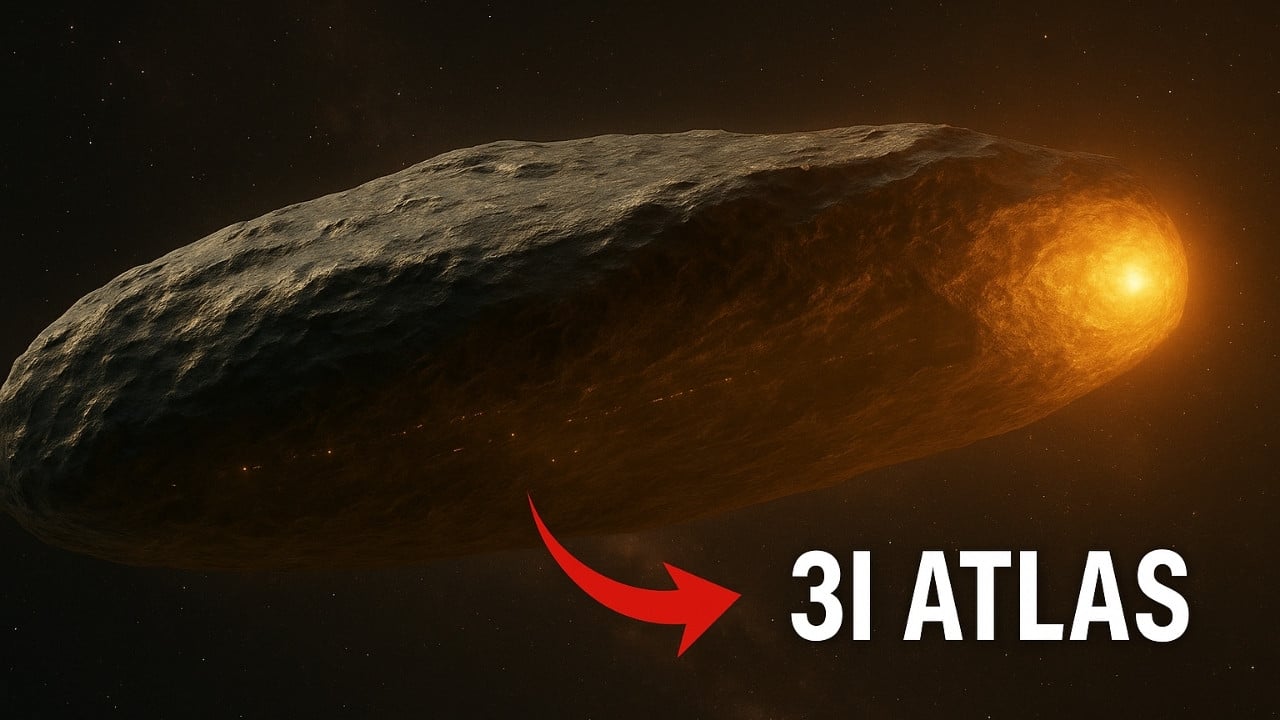
However, the scientific consensus demands extraordinary, testable evidence before entertaining such claims.
The public fascination with 3I/Atlas has also sparked viral myths.
In August 2025, coincidental alignments with Mercury and the star Sirius inspired social media speculation about cosmic energies and hidden meanings.
Astronomers quickly debunked these claims, but misinformation spread widely, highlighting the need for transparent, timely scientific communication.
Looking ahead, new survey instruments like the Vera Rubin Observatory and the Square Kilometer Array promise to revolutionize interstellar object detection and characterization.
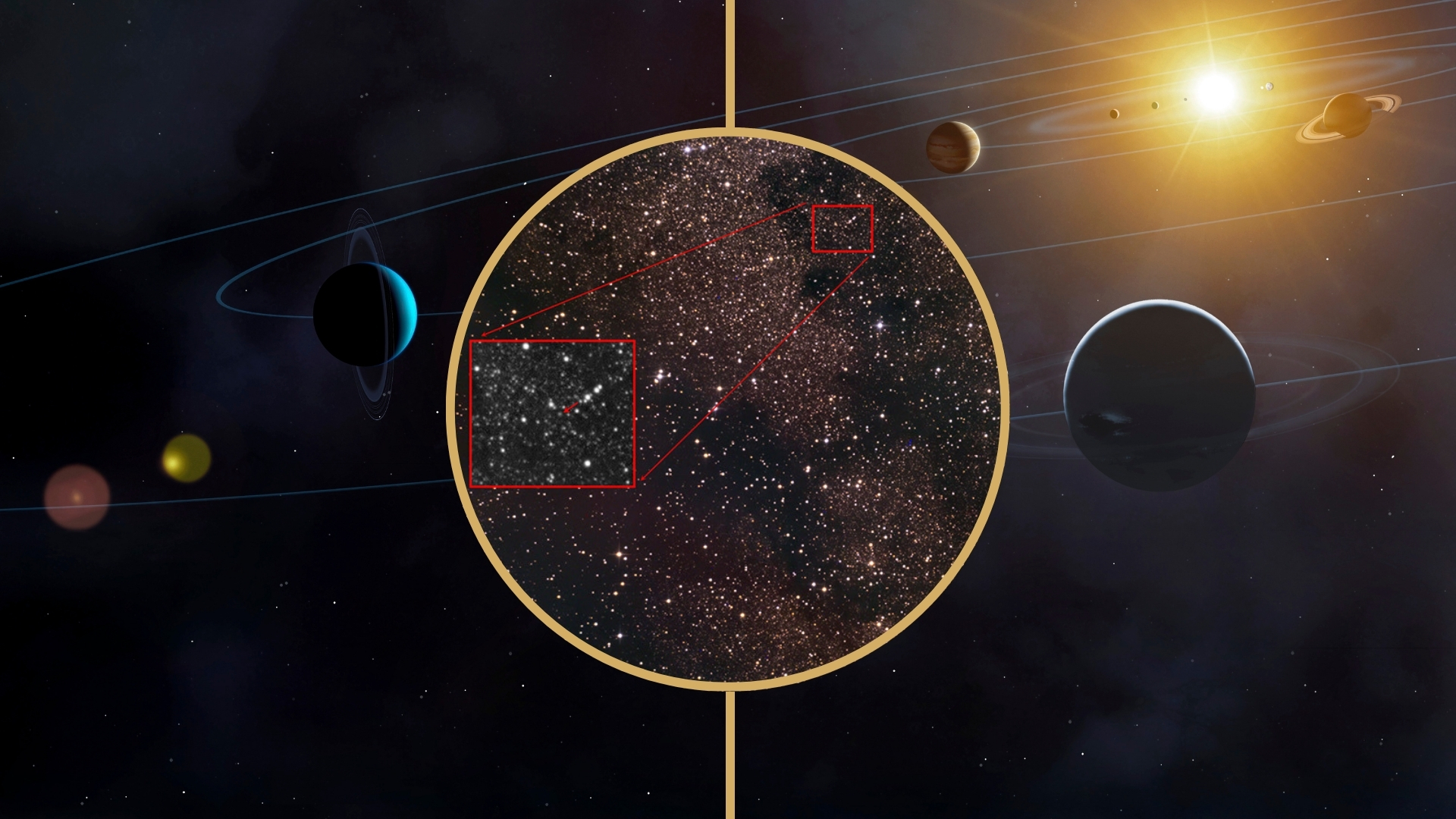
These facilities will provide real-time alerts, richer chemical fingerprints, and enhanced searches for radio anomalies, enabling rapid-response missions.
NASA and international space agencies are drafting protocols for fast-launch interceptors—small, agile spacecraft ready to chase down and study future interstellar visitors.
The era of accidental discovery is ending, replaced by coordinated, proactive exploration.
3I/Atlas’s remarkable activity at a distance, its unusual chemistry, and its unique physical properties have rewritten comet science.
Its story is a vivid reminder that interstellar visitors carry invaluable messages about the galaxy’s diversity, waiting for humanity to decode them.
News

😱 Is Ian Gillan Next? Shocking Retirement Rumors Emerge After David Coverdale’s Exit! 😱 – HTT
😱 Is Ian Gillan Next? Shocking Retirement Rumors Emerge After David Coverdale’s Exit! 😱 In the world of rock music,…

😱 The Shocking Truth Behind Ian Gillan’s Retirement Plans: Is It Time to Say Goodbye? 😱 – HTT
😱 The Shocking Truth Behind Ian Gillan’s Retirement Plans: Is It Time to Say Goodbye? 😱 Ian Gillan, the legendary…
😱 Is 3I/ATLAS a Cosmic Seed or a Galactic Trojan Horse? Prepare to Be Amazed! 😱 – HTT
New Evidence Sheds Light on the Enigmatic 3I/ATLAS: A Cosmic Visitor Defying Expectations Since the dawn of telescopic astronomy, interstellar…

😱 From Waltz to Heartfelt Confession: Andre Rieu’s Emotional Birthday Surprise! 😱 – HTT
😱 From Waltz to Heartfelt Confession: Andre Rieu’s Emotional Birthday Surprise! 😱 What’s the one love song that always melts…
😱 From Wedding Fiddler to Billboard King: How Andre Rieu Redefined Classical Music! 😱 – HTT
😱 From Wedding Fiddler to Billboard King: How Andre Rieu Redefined Classical Music! 😱 Andre Rieu did the unthinkable. He…

😱 Heartbreak in Rock: The Real Reason Behind Ace Frehley’s Untimely Death! 😱 – HTT
😱 Heartbreak in Rock: The Real Reason Behind Ace Frehley’s Untimely Death! 😱 Ace Frehley, the legendary guitarist and founding…
End of content
No more pages to load