SHOCKING TRUTH Behind the Air Canada Jet Collision at LaGuardia Airport – Was there an outside enemy involved?
Tragic Collision at LaGuardia Airport: A Closer Look at the Incident and Its Aftermath
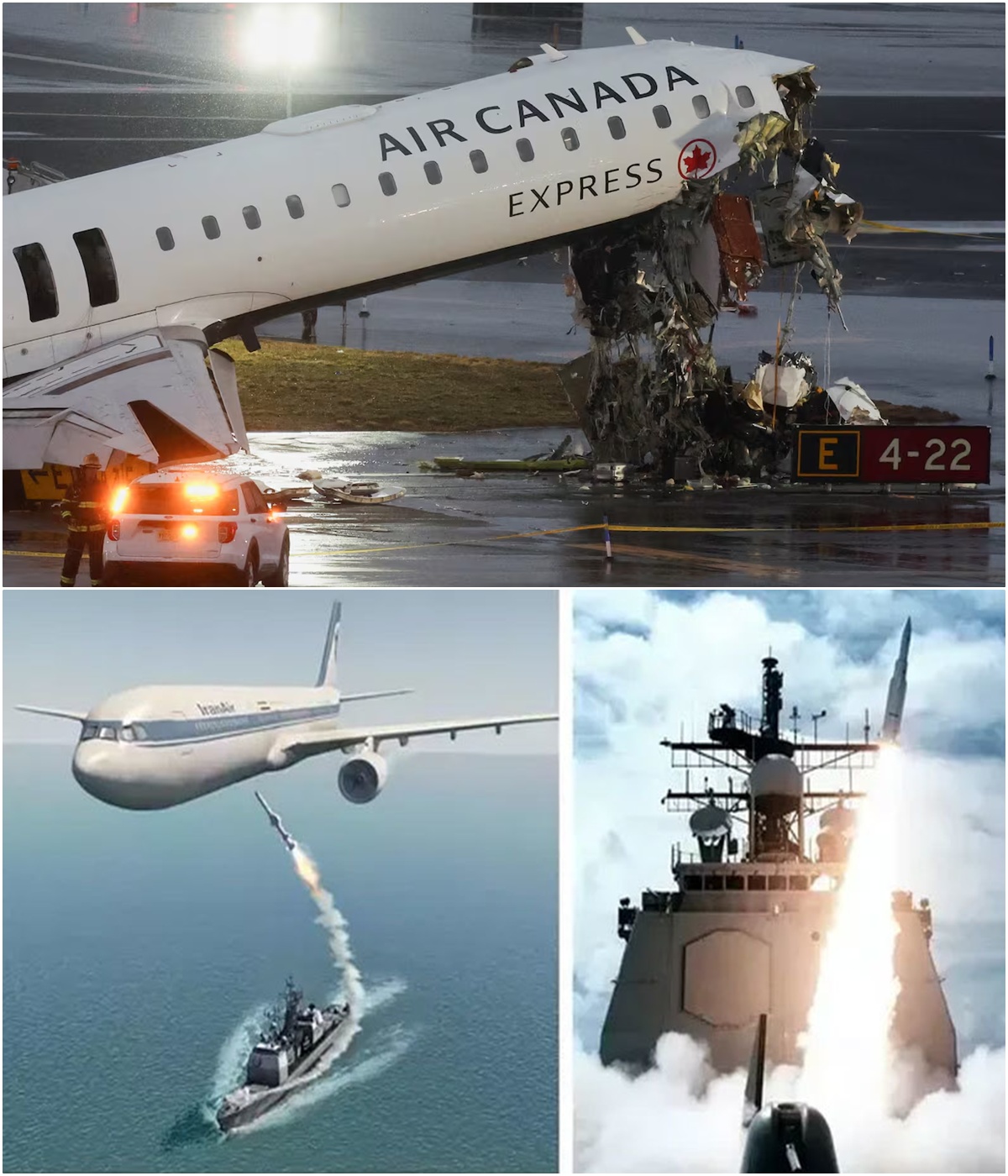
On the night of March 22, 2026, a devastating accident occurred at New York’s LaGuardia Airport when an Air Canada Express Bombardier CRJ900 regional jet collided with a Port Authority fire truck on the runway. The crash occurred shortly after the aircraft’s landing, tragically claiming the lives of both pilots onboard.
This article will delve into the sequence of events, the factors contributing to the collision, the response from emergency services, and the ongoing investigation by authorities such as the National Transportation Safety Board (NTSB) and the Federal Aviation Administration (FAA).
The Incident:
The collision took place around 11:40 p.m. Eastern Time on March 22, 2026, on runway 4 at LaGuardia. This runway, frequently used for arrivals and departures, was the site of the tragic accident. The Air Canada Express flight, operated by Jazz Aviation, was arriving from Montreal-Pierre Elliott Trudeau International Airport when it struck a fire truck that was responding to a separate, unrelated emergency on the tarmac.
The circumstances leading up to the collision remain unclear. Preliminary information suggests that the fire truck was crossing the runway to reach the emergency situation when the Air Canada jet, coming in to land, collided with the vehicle. The investigation is still ongoing, and air traffic control communications will likely provide critical insights into how the incident occurred.
LaGuardia Airport: A Tight-Knit Operation
LaGuardia, situated in the heart of New York City, is known for its high traffic volume and limited space. While the airport operates efficiently most of the time, its relatively small runways and congested airspace present significant challenges for air traffic controllers. The airport handles thousands of flights each day, often with tightly packed schedules. This increases the risk of incidents, particularly in nighttime conditions where visibility can be compromised.
Air traffic controllers at LaGuardia are known for their expertise, and the choreography of aircraft movements is finely tuned. They are accustomed to managing complex scenarios with multiple aircraft landing, taking off, or taxing on the same runway. However, as the incident on March 22 demonstrated, even the most well-coordinated systems can face unforeseen challenges.
The Aircraft Involved:
The aircraft involved in the crash was a Bombardier CRJ900, a regional jet used primarily for short and medium-haul flights. The CRJ900 is equipped with twin engines and can carry up to 90 passengers, depending on the configuration. Despite its small size compared to larger aircraft, it is a robust, reliable machine designed to operate efficiently in regional markets.
This particular flight, operating under the Air Canada Express brand, was on a typical route between Montreal and LaGuardia. The plane, however, never completed its journey as both pilots tragically lost their lives in the collision. Fortunately, the flight attendants survived, although many were injured and required medical attention.
The crash caused significant front-end damage to the aircraft, particularly the cockpit area, where the force of the impact was most concentrated. Photos from the scene show the aircraft’s nose severely crushed, highlighting the violent nature of the collision. The speed at which the fire truck was moving and the precise position of both vehicles at the time of impact remain under investigation.

Emergency Response:
The Port Authority fire truck was responding to a separate emergency on the tarmac when the accident occurred. As part of standard operating procedures, emergency vehicles are often stationed on runways in case of any in-flight incidents, such as a malfunction or crash during takeoff or landing. The fire truck, which was not involved in the initial emergency but was deployed for precautionary reasons, was crossing the runway when the collision occurred.
Following the incident, LaGuardia Airport was immediately shut down, and emergency response teams rushed to the scene. The quick actions of the emergency responders helped to minimize further casualties and ensured that the injured passengers were rapidly transported to local hospitals.
The Investigation:
In the hours following the collision, the NTSB took charge of the investigation, supported by the FAA, Air Canada, and Jazz Aviation. Early reports indicated that runway incursion protocols would be a focal point of the investigation. The critical question was whether the fire truck was authorized to cross the runway at the time of the landing. Runway incursions—when an unauthorized vehicle or aircraft enters an active runway—are a significant safety concern in aviation.
Aviation experts have pointed out that air traffic control communications, especially during nighttime operations, are crucial to understanding what went wrong. Controllers must provide clear instructions to both aircraft and ground vehicles to avoid such incidents. In this case, the air traffic controller had instructed the fire truck to cross the runway, but whether it was in the clear when the aircraft came in remains a key point under investigation.
The investigation will also look at the adequacy of safety measures at LaGuardia, particularly during nighttime operations. Given the complexity of managing so many flights in such a confined space, the investigation could lead to a review of operational procedures to prevent similar incidents in the future.
Flight Crew and Passengers:
The two pilots aboard the Air Canada Express flight, unfortunately, perished in the crash. Their deaths highlight the extreme dangers of aviation, even in an era of advanced safety technology. The cabin crew, including flight attendants, was reported to have sustained injuries, although they survived the crash.
The other 41 people onboard the aircraft, mostly passengers, were also injured and were taken to local hospitals for treatment. Thankfully, none of the injuries were life-threatening, but many of the passengers required immediate medical care. Their families are understandably grieving, and support is being provided by both Air Canada and Jazz Aviation.

Emotional and Community Impact:
This tragedy has deeply affected the aviation community and the families of those involved. Governor Kathy Hochul of New York called the incident “heartbreaking” and offered her condolences to the families of the pilots. Air Canada and Jazz Aviation have expressed their condolences and promised to support the affected families. The emotional toll of such an incident extends far beyond those directly involved, impacting the entire aviation community and raising awareness about the importance of safety and protocol in airport operations.
Safety Reforms and Future Actions:
In the wake of this tragedy, many are calling for a reassessment of runway incursion protocols, especially in busy, congested airports like LaGuardia. The accident has drawn attention to the need for continuous improvements in air traffic control procedures and emergency response coordination. While aviation safety has improved over the years, this incident serves as a tragic reminder that there is always room for improvement.
The NTSB’s investigation will likely result in new safety recommendations for airports across the United States, including enhanced training for air traffic controllers, better communication systems for nighttime operations, and stricter adherence to runway incursion protocols.
Conclusion:
The collision at LaGuardia Airport on March 22, 2026, is a tragic event that has shaken the aviation community. While the investigation is still ongoing, the incident highlights the dangers of busy airports, especially during nighttime operations. The quick and effective response from emergency services helped to mitigate the situation, but the loss of two pilots is a reminder of the risks involved in aviation.
As we await the findings of the investigation, our thoughts remain with the families of the victims and those affected by the accident. The aviation industry will undoubtedly learn valuable lessons from this tragedy, and reforms will be necessary to ensure that such an incident does not occur again in the future.